
Blepharoplasty & Eyelid Surgery in Dunwoody,
Sandy Springs & North Atlanta
Eyelid surgery addresses hooded upper lids and the puffiness or loose skin beneath the eyes. Dr. Stephenson plans the upper and lower lids separately, because they age differently and are corrected differently.
What Eyelid Surgery Addresses
Blepharoplasty treats the upper lids, the lower lids, or both. They are separate procedures with separate approaches, and many patients need only one of them.
- Hooded or drooping upper lids — excess skin and fat that gives the eye a heavy, tired look.
- Vision obstructed by the upper lid — where the skin has descended far enough to sit in the field of view.
- Constant eyebrow-raising — the habit of lifting the brow to see past a heavy lid, which contributes to forehead lines.
- Under-eye bags and puffiness — caused by fat deposits that accumulate over time.
- Loose skin beneath the eye — sagging along the lower lid, distinct from the fullness behind it.
- Lower lid laxity — assessed separately, and tightened during surgery where it is present.
Upper, Lower, and How the Plan Is Built
Which procedure suits you depends on whether the concern is skin, fat, or both — and on which lid it sits in.
Upper Blepharoplasty
Removes excess skin and fat from the upper lid. The incision sits in the lid’s natural crease, so the scar sits there too.
Lower Blepharoplasty
Removes or repositions fat, tightens skin, and smooths the contour of the lower lid.
Transconjunctival
A lower-lid approach through a hidden incision inside the eyelid. Fat is addressed with no external incision at all.
Subciliary
Where there is loose skin as well as fullness, a small incision just below the lashes allows the skin to be tightened.
Fat is preserved, not simply removed
The lower lid is where eyelid surgery most often goes wrong, and it goes wrong by taking too much. Fat can be repositioned to fill a depression rather than removed from it, which is what keeps the contour smooth. The result Dr. Stephenson works toward is an eye that looks rested — not one that looks hollowed or operated on.
Age is not the deciding factor
Lower lid surgery is more common in older patients and in those with sun damage, but age itself does not determine whether it is appropriate. The decision rests on whether there is something present that warrants surgery.
What may be discussed alongside it
Eyelid surgery is frequently performed with a facelift and neck lift. It is worth knowing where the boundaries fall: a facelift improves the face from the upper cheeks down and does not change the eyes, and it will not raise your eyebrows — that is a brow lift. Eyelid surgery addresses the lids themselves.
Your written quote
Upper blepharoplasty starts at $6,975 and lower at $6,625; both together start at $9,800. Upper blepharoplasty can also be performed in our in-office surgery suite under oral sedation, which starts at $4,125. After your consultation, our Patient Coordinator prepares a written quote for the plan you and Dr. Stephenson agree. Pricing and financing options are set out in full.
Who May Be a Candidate
Eyelid surgery suits healthy patients with excess skin, puffiness, or drooping in the upper lids, the lower lids, or both. Whether it suits you is a question for a consultation, not a website.
- What concerns you is the starting point — not your age, and not what the lids look like to anyone else.
- Your anatomy determines which lid is treated, which approach is used, and whether lower lid tightening is needed alongside.
- Your general health. Full disclosure of your medical history is essential to assessing surgical risk accurately.
- Recovery has to be planned for — short here, but the first week still needs accounting for.
- Realistic goals. Dr. Stephenson will speak clearly about whether your goals are realistic and attainable.
Our practice guideline is to accept patients with a BMI of 33 or below, as higher BMI is associated with conditions that increase surgical risk. Candidacy is confirmed at consultation.
What Recovery Looks Like
Eyelid surgery recovers faster than most facial procedures. You will be given detailed post-operative instructions.
| Stage | Guidance |
|---|---|
| Swelling and bruising | Through the first week, subsiding quickly. Patients who commit to icing often have minimal bruising, typically gone within a week. |
| Pain | Medication is provided; most patients need it for about three days. Cold compresses help in the early days. |
| Working from home | Possible the day after surgery. |
| Back to the workplace | Within 7 to 10 days, depending on your own comfort with any remaining swelling or bruising. |
| Showering | 48 hours after surgery. |
| Caring for the incision | Minimal. It can get wet immediately, and no special scar ointment is usually required. |
| Stitches | Removed 4 to 6 days after surgery. |
| Driving | Once you are off all narcotic pain medication and comfortable and unrestricted in movement. |
| Exercise | Light exercise after about a week. Stay cautious for up to three weeks to avoid post-surgical bleeding. |
| Seeing your results | The improvement shows almost immediately; full recovery takes a few weeks. |
| Follow-up appointments | The next day, one week, one month, and one year after surgery. |
| Aftercare facility | Generally not necessary unless eyelid surgery is combined with another procedure such as a facelift. Someone to help you immediately afterwards is advisable. |
When to seek help immediately. Complications are rare, but bleeding can put pressure on the eye. Seek medical attention at once if you experience severe pain, severe swelling, or any loss of vision.
Fuller recovery planning — time off work, driving and flying, and swelling and bruising support — is set out on our Patient Resources page.
Before & After
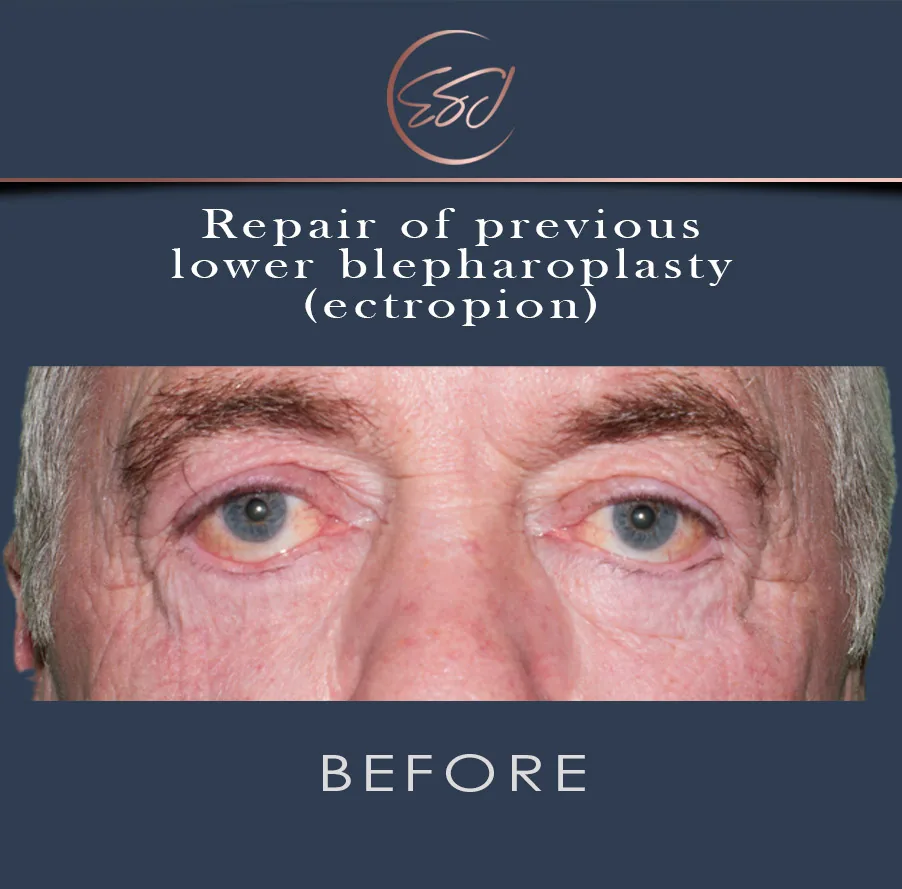
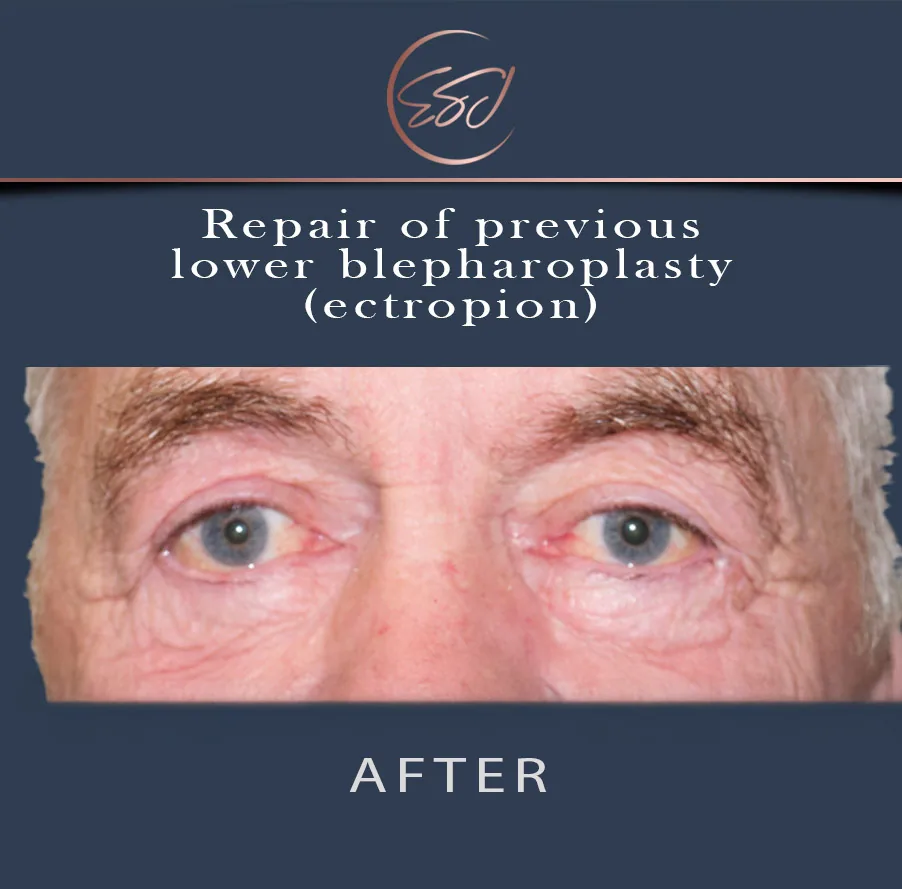
Repair of a previous lower blepharoplasty performed elsewhere, which had resulted in ectropion.
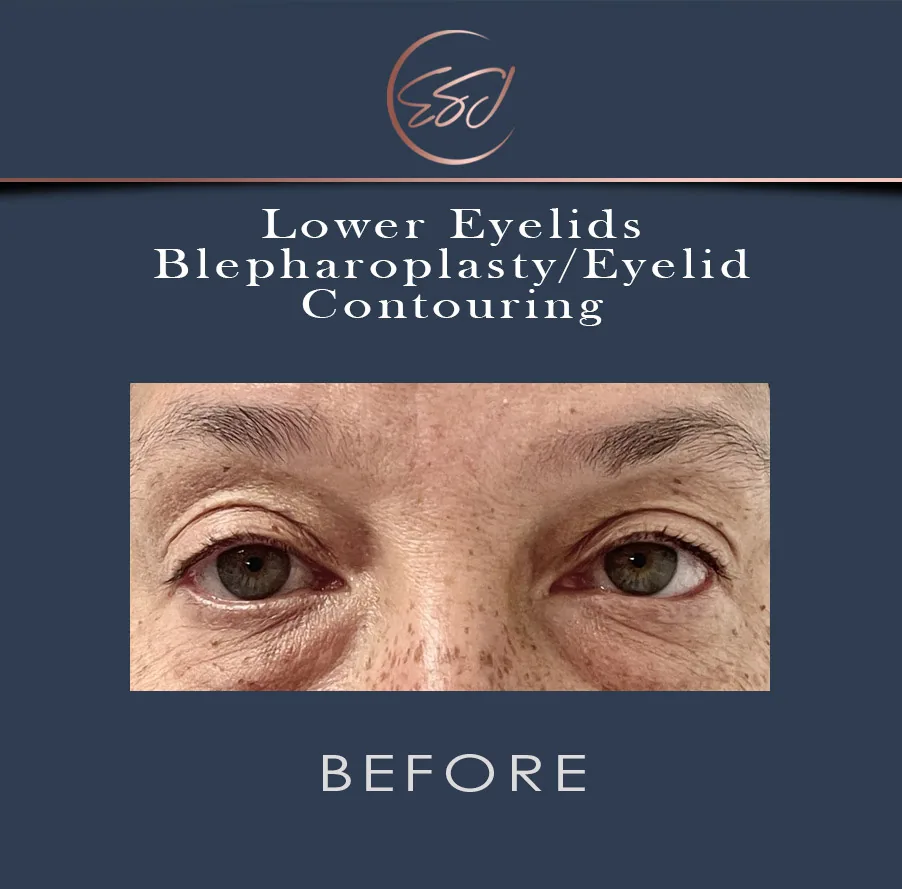
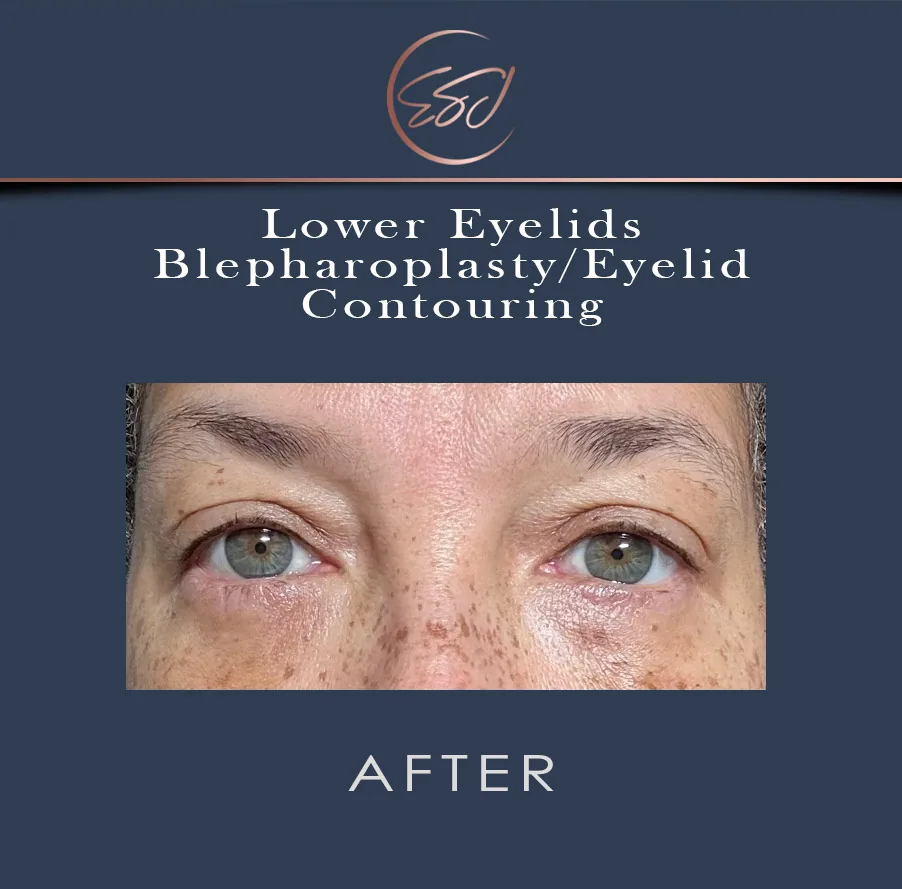
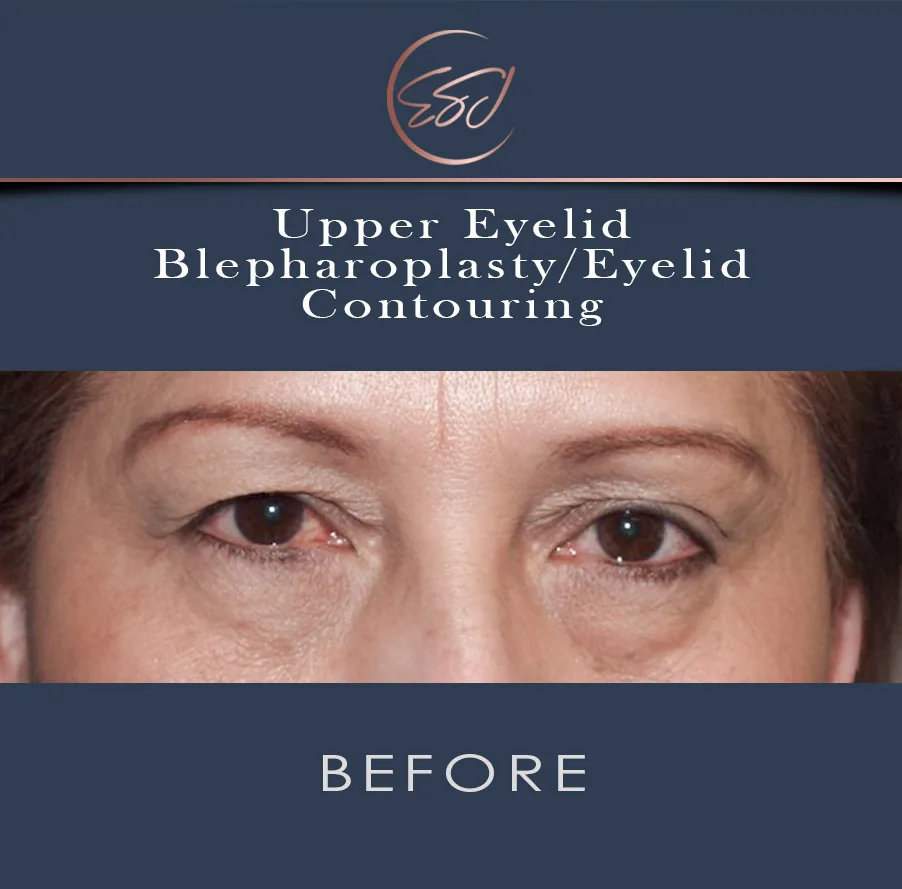
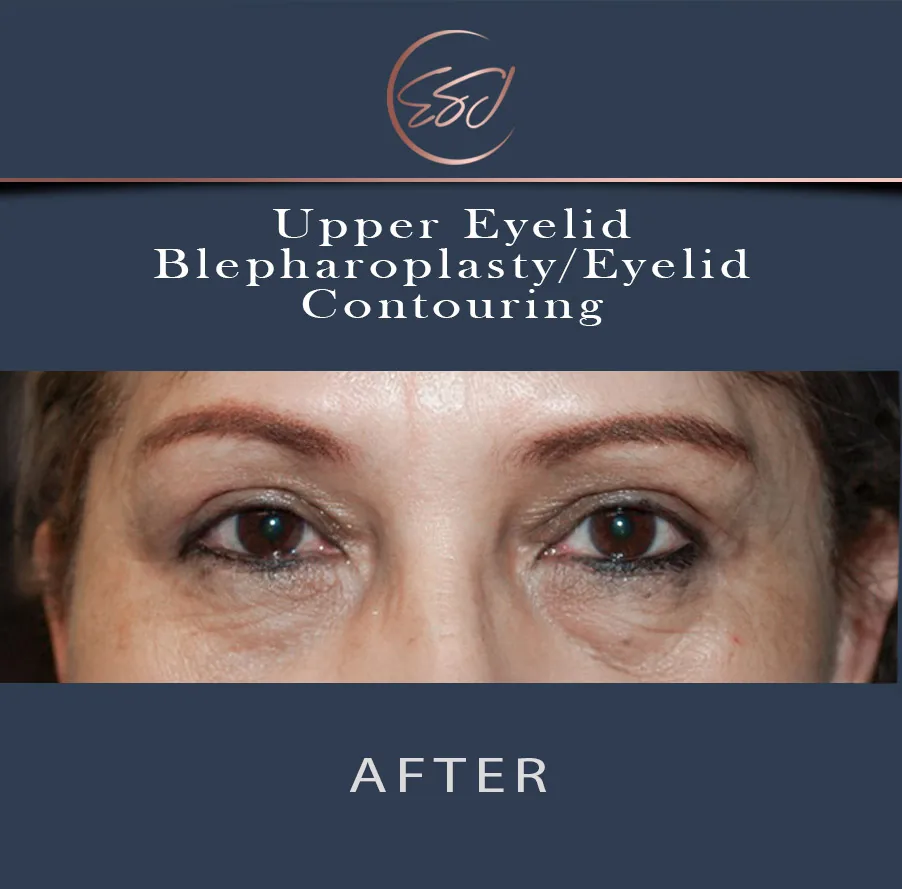
Photographs are of actual patients of ESJ Aesthetics, published with their consent. Results vary from patient to patient.
Often Considered Alongside
Facelift & Neck Lift
Addresses the face from the upper cheeks down. Frequently planned together with eyelid surgery.
Read more →Brow Lift
The eyebrows and forehead — what eyelid surgery does not address, and the reason a heavy brow is sometimes the real problem.
Read more →Chin & Profile Refinement
Chin projection and the submental area, drawing on Dr. Stephenson’s oral and maxillofacial training.
Read more →Chemical Peels & Skin Quality
Surgery repositions structure; the fine lines around the eye are a question of skin quality, and often worth addressing alongside.
Read more →Eyelid Surgery FAQs
Who is helped by a lower blepharoplasty?
A lower eyelid lift removes bulging fat, loose skin, or both from the lower lid. It is more common in older patients and in those with sun damage.
At what age is it best to have a lower blepharoplasty?
Age is not the determining factor. The decision is based on whether there is something present that warrants surgery.
Where are the incisions made for lower blepharoplasty?
For fat, on the inside of the lower eyelid, which leaves no external scar. Where skin also needs to be removed, a second incision is made just beneath the lashes.
What happens to the fat in a lower blepharoplasty?
Preserving fat matters. Rather than simply removing it, fat can be repositioned to fill depressions and maintain a smooth contour — which is what avoids a hollowed result.
What about lower lid laxity?
Dr. Stephenson checks for laxity in the lower lid as part of the assessment, and may perform a procedure to tighten it where that is needed.
What should I consider before deciding on lower blepharoplasty?
Whether the surgery can achieve the change you are looking for, and whether the risks and the cost are acceptable to you. Both are worth discussing directly at consultation.
Will there be scars?
The upper lid incision sits in the natural crease of the lid. A transconjunctival lower lid incision is inside the eyelid and leaves no external scar at all; a subciliary incision sits just beneath the lashes. How a healed incision looks is influenced by genetics as well as by the surgery.
How can I reduce scarring after eyelid surgery?
The incisions need very little care and no special ointment is usually required. Where patients do want to use something, the practice has had positive feedback for Scar Guard, silicone gel strips, and silicone ointment.
Do I need to go to an aftercare facility?
Generally not, unless eyelid surgery is combined with another procedure such as a facelift. Having someone to assist you immediately after surgery is advisable.
What do I need to watch out for after surgery?
Complications are rare, but bleeding can put pressure on the eye. Seek medical attention immediately if you experience severe pain, severe swelling, or any loss of vision.
Can eyelid surgery be done in the office rather than an operating room?
Upper blepharoplasty can be performed in our in-office surgery suite under oral sedation, which lowers the overall cost. Whether that is appropriate for you is decided at consultation.
How is the cost determined?
Upper blepharoplasty starts at $6,975 and lower at $6,625; both together start at $9,800. Performed in-office under oral sedation, upper blepharoplasty starts at $4,125. After your consultation you receive a written quote covering the whole plan.
Further Reading
Discuss Your Options
An hour with Dr. Stephenson, an examination, and a written quote for the plan you agree together.