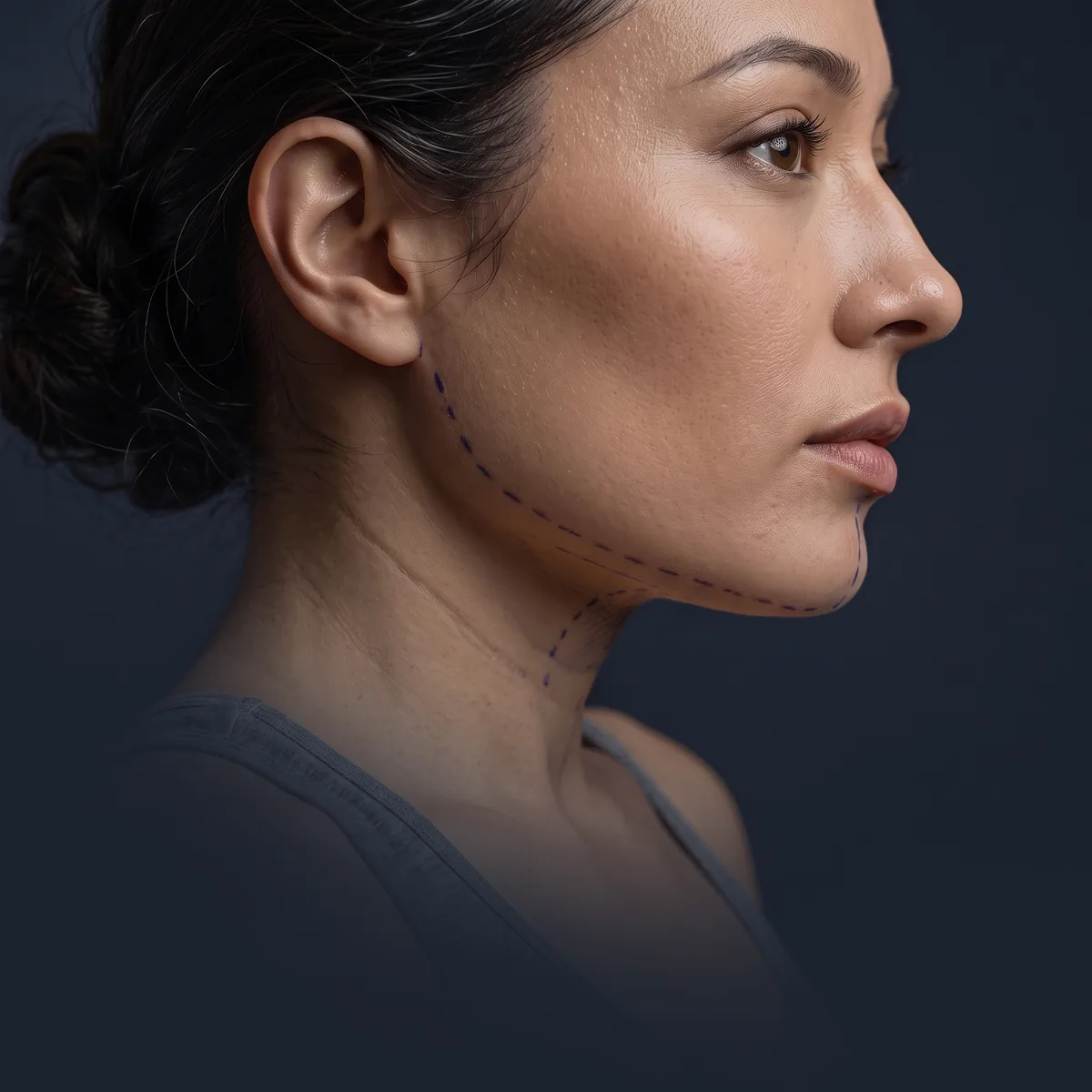
Chin & Profile Refinement in Dunwoody,
Sandy Springs & North Atlanta
The chin sets the profile, and a chin that sits too far back or too far forward unbalances everything around it. Dr. Stephenson can reposition the bone itself — which is oral and maxillofacial surgery, applied to an aesthetic problem.
What Chin & Profile Surgery Addresses
A chin can be too far back or too far forward, and either unbalances the face around it. The neck beneath is a related but separate question.
- A weak or retruded chin — sitting further back than the rest of the profile supports.
- An over-projecting chin — too strong for the face, and corrected by reducing rather than adding.
- Vertical proportion — a chin can be short or long as well as forward or back.
- Fullness beneath the chin — the double chin, which is fat rather than bone and is treated differently.
- Jawline definition — the line between chin and neck, which is what actually reads at conversational distance.
There is an objective reference for chin position. Draw a line connecting the upper and lower lips. Women typically benefit from a chin sitting slightly behind that line; men often look best with a chin that aligns with it or projects slightly beyond. It is a starting point for the conversation, not a target to be hit.
Moving the Bone, or Adding to It
There are two ways to change chin projection: move the patient’s own bone, or place an implant in front of it. They are not equivalent, and Dr. Stephenson has a stated preference.
Sliding Genioplasty
The chin bone is cut and moved — forward, backward, or vertically — then fixed with a titanium plate and screws. Every incision is inside the mouth.
Reduction Genioplasty
For a chin that projects too far forward. The bone is reduced and secured with plates and screws, again entirely through the mouth.
Chin Implant
A synthetic implant placed to increase projection. Effective for subtle enhancement, but it carries risks the bone approach does not.
Submental Liposuction
Chin lipo. Removes fat from beneath the chin and along the jawline. Minimal scarring and a short recovery.
Why the bone, where it is possible
In plastic surgery, using the patient’s own tissue is preferred wherever it can be done, and the chin is a clear case. A sliding genioplasty adjusts in three directions — forward, backward, and vertically — where an implant only adds projection in one. It uses no foreign material. And the incisions are made entirely inside the mouth, so there is no external scar at all.
This is where Dr. Stephenson’s second specialty stops being a line on a CV. Repositioning the jaw and chin skeleton is core Oral & Maxillofacial surgery. Most plastic surgeons offering chin work offer an implant, because moving the bone is not in their training.
When an implant is the right answer
Implants are not ruled out, and used appropriately they give excellent results — particularly where the change wanted is subtle. But they are not the default here, and the reasons are worth stating plainly: an implant can become infected, can sit or migrate out of position, and can become exposed over the long term. Those risks do not apply to your own repositioned bone.
The neck is a separate question
Fullness under the chin is fat, not bone, and a genioplasty does not remove it — the procedures address different tissue. Submental liposuction treats the fat directly, and the two are often planned together, along with jawline surgery, when what someone wants is the whole profile rather than one part of it. A facelift and neck lift addresses laxity, which is different again.
Your written quote
Sliding genioplasty starts at $8,450 and chin augmentation with an implant at $8,475. Submental liposuction can be performed in our in-office surgery suite under oral sedation, starting at $3,900. After your consultation, our Patient Coordinator prepares a written quote for the plan you and Dr. Stephenson agree. Chin surgery is treated as aesthetic and is generally not covered by insurance, though it is worth verifying with your provider. Pricing and financing options are set out in full.
Who May Be a Candidate
Chin surgery suits patients whose profile is unbalanced by chin position, whether that is too little projection or too much.
- Completed facial growth. There is no specific age restriction, but the procedure is generally recommended once facial growth is finished.
- What is actually causing the profile — bone position, soft tissue fullness, or both. That distinction decides the operation.
- A permanent change. Sliding genioplasty repositions bone and the result is considered permanent; reversal is challenging. It is worth being certain.
- Your general health. Full disclosure of your medical history is essential to assessing surgical risk accurately.
- Realistic goals. Dr. Stephenson will speak clearly about whether your goals are realistic and attainable.
Our practice guideline is to accept patients with a BMI of 33 or below, as higher BMI is associated with conditions that increase surgical risk. Candidacy is confirmed at consultation.
What Recovery Looks Like
Recovery depends on which procedures are involved. You will be given detailed post-operative instructions.
| Stage | Guidance |
|---|---|
| Swelling and bruising | Expected, and typically subsiding within a few weeks. |
| Pain | Managed with prescribed medication. Following the post-operative instructions closely is what makes recovery go smoothly. |
| Neck dressing | A compressive neck dressing may be recommended for one week, to support healing and the result. |
| Chin strap | May be recommended in the early stages, for support and to reduce swelling. |
| Normal activities | Most patients within a few weeks of surgery. |
| Seeing your results | It can take several months for swelling to fully subside and the final result to show. Patience is part of it. |
| How long it lasts | Results are generally considered permanent, though natural aging and lifestyle still affect the face over time. |
As with any surgery there are risks — infection, bleeding, numbness, asymmetry, and scarring among them. Dr. Stephenson will go through those specific to your plan at consultation. Fuller recovery planning is set out on our Patient Resources page.
Before & After
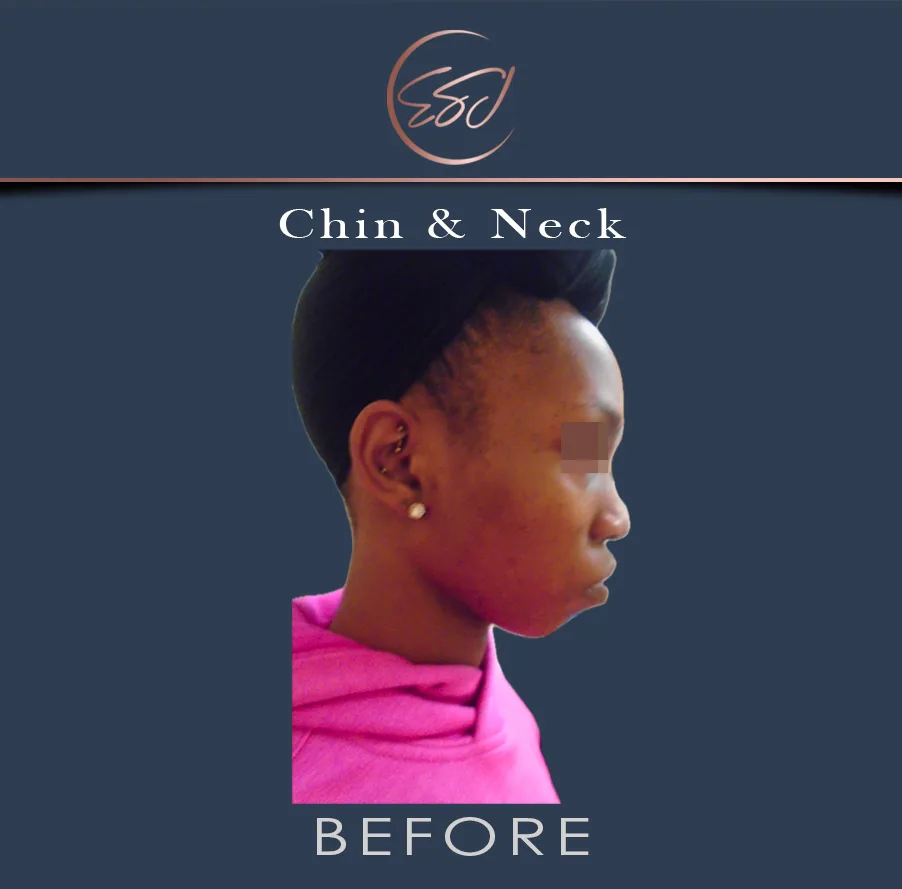
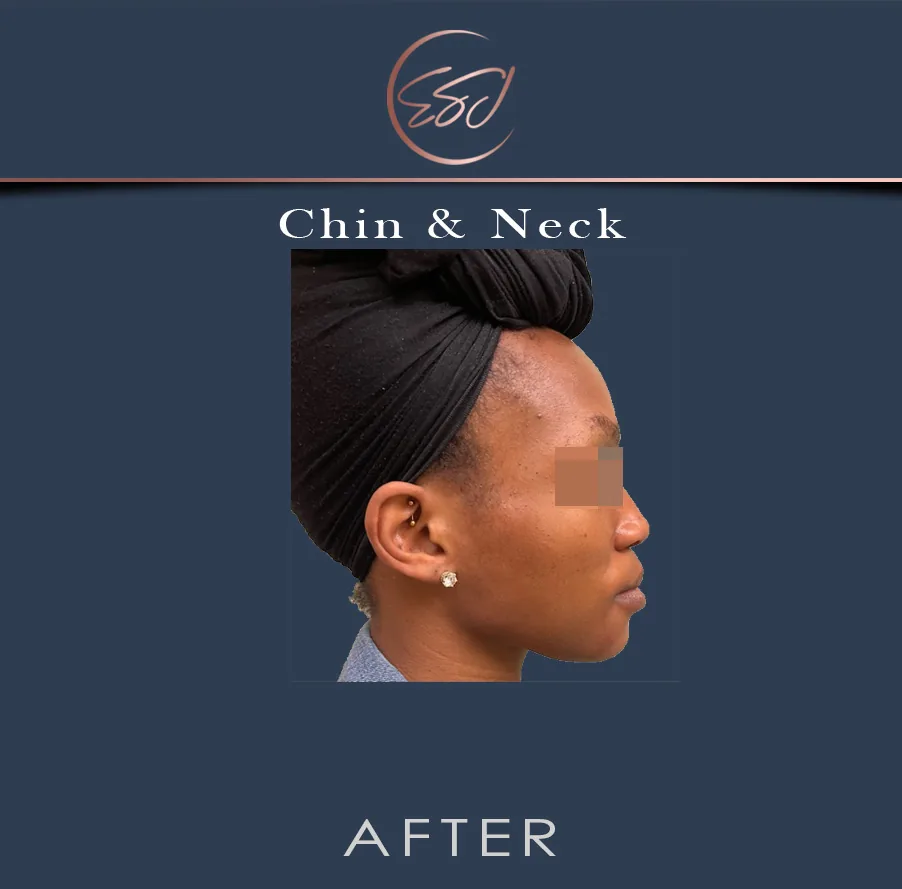
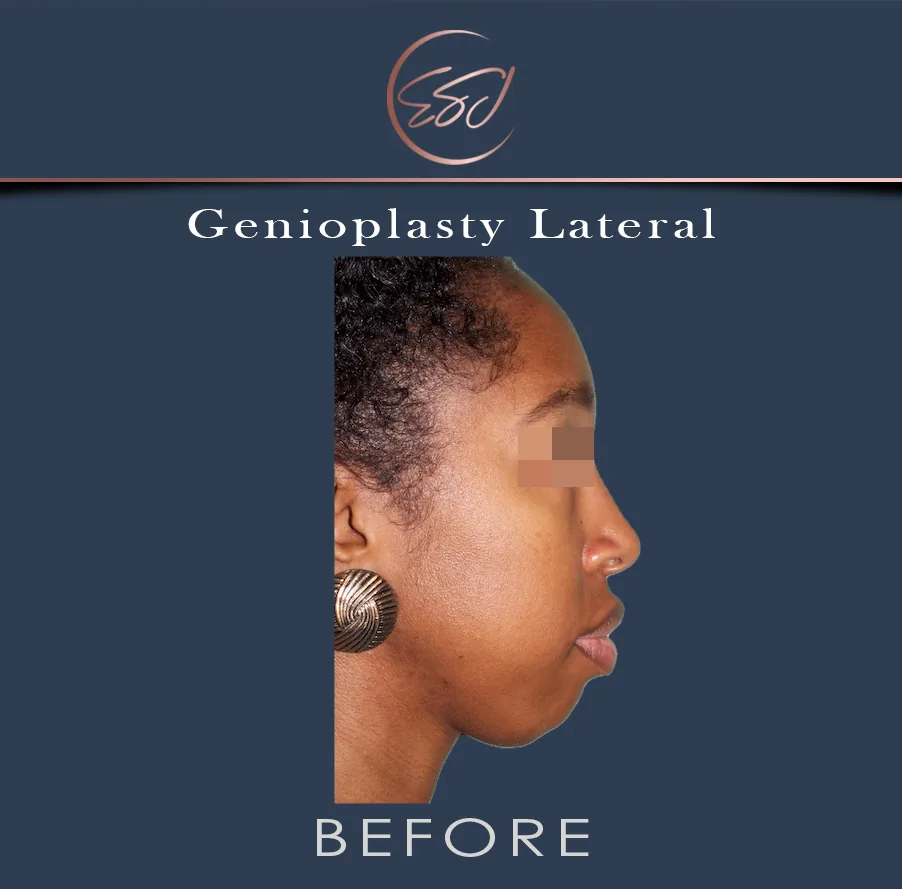
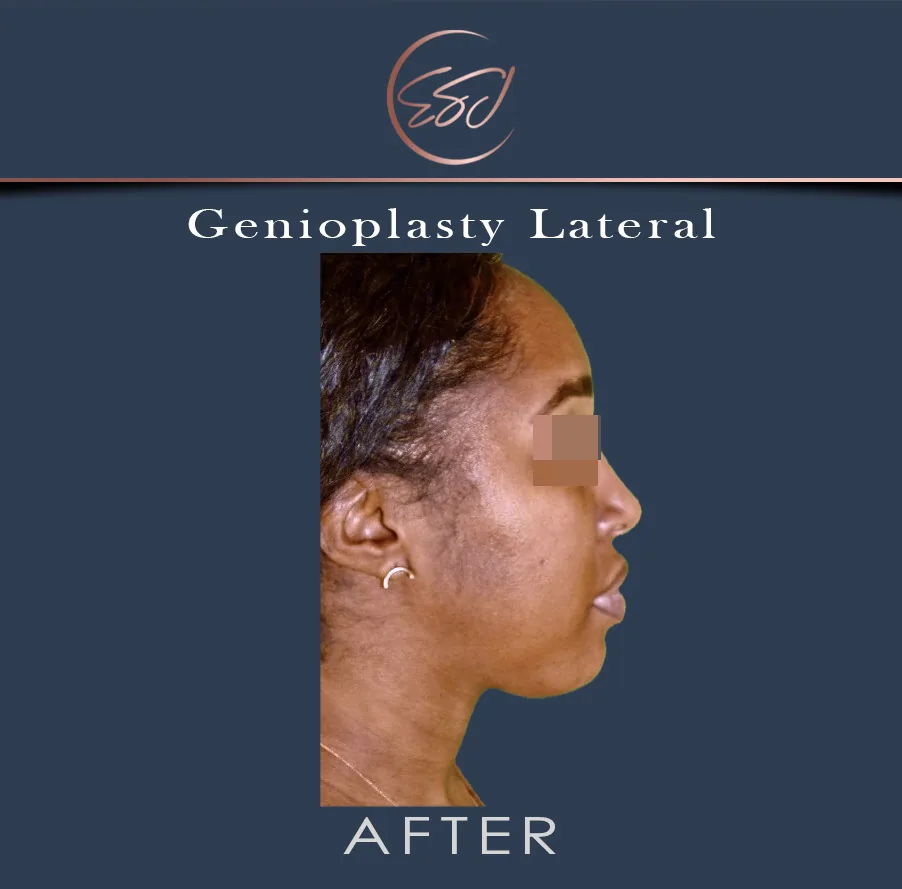
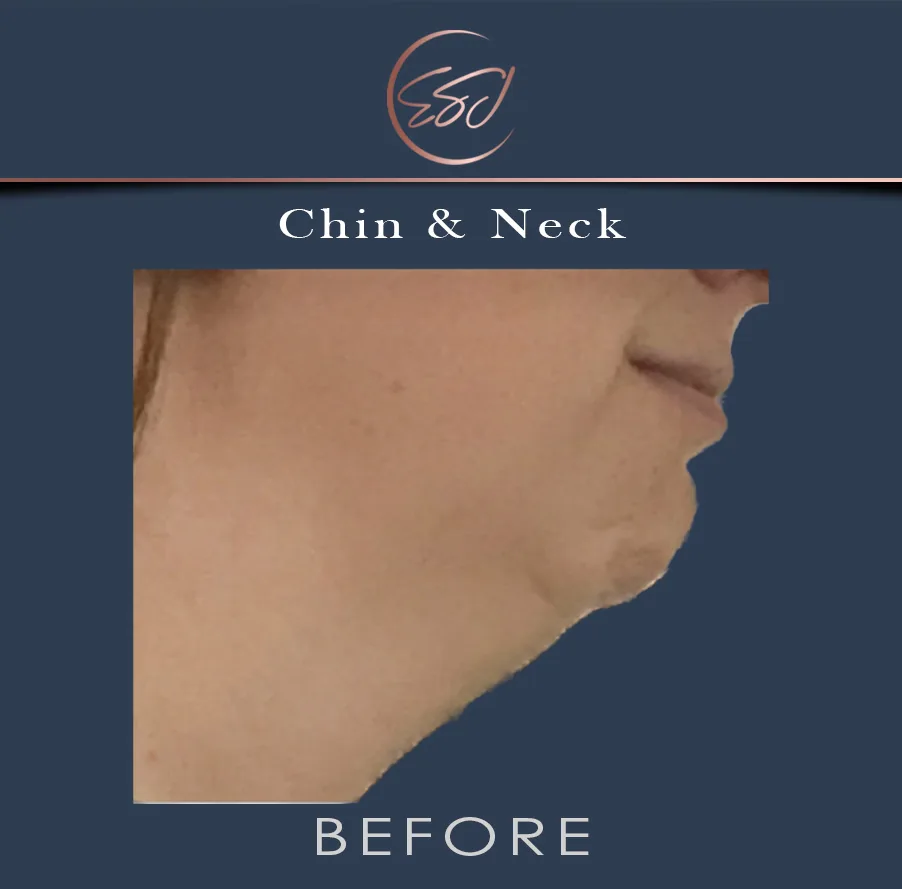
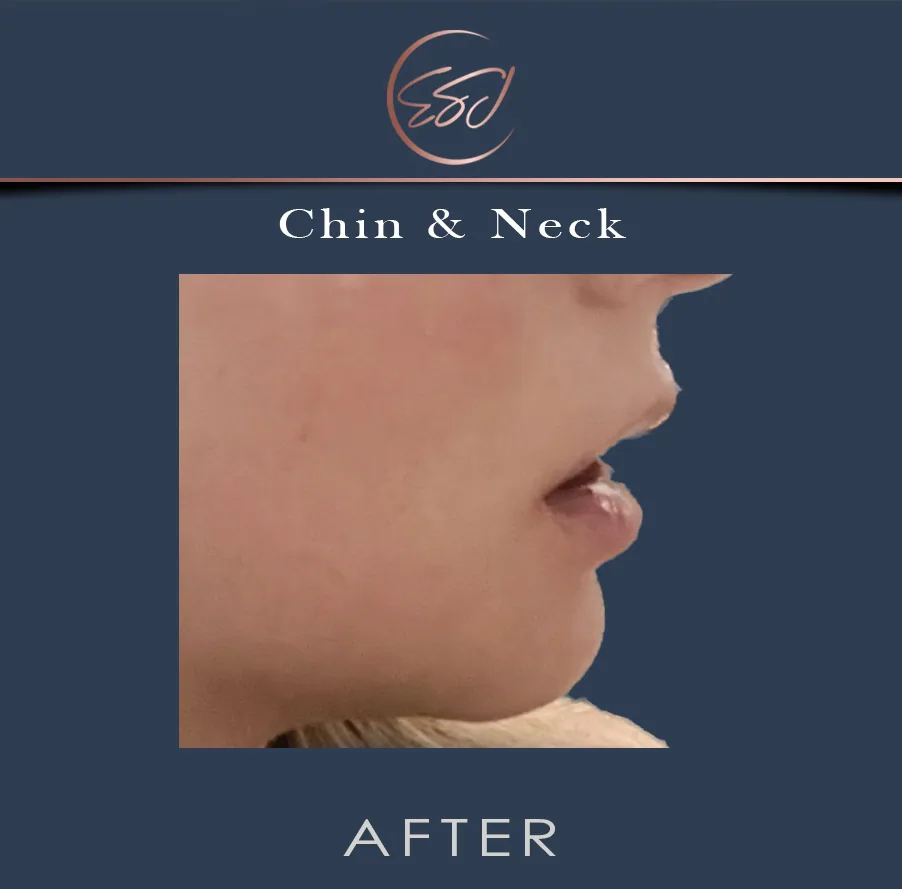
Photographs are of actual patients of ESJ Aesthetics, published with their consent. Results vary from patient to patient.
Often Considered Alongside
Facelift & Neck Lift
Addresses laxity through the lower face and neck — a different problem from chin position, and often present alongside it.
Read more →Eyelid Surgery
The upper and lower lids. Frequently combined where the whole face is being planned rather than one feature.
Read more →Brow Lift
The upper third of the face, completing the profile that chin surgery balances from below.
Read more →Facial Surgery for Men
Chin projection is the clearest point where the target differs by sex — a man’s chin is planned to a different line than a woman’s.
Read more →Chin & Profile FAQs
Why move the bone rather than use an implant?
Using the patient's own tissue is preferred wherever it can be done. A sliding genioplasty adjusts the chin in three directions — forward, backward, and vertically — where an implant only adds projection. It introduces no foreign material, and every incision is inside the mouth, so there is no external scar.
What are the risks of a chin implant specifically?
Infection, malposition, and long-term exposure. Implants are not ruled out and give excellent results when used appropriately, particularly for subtle enhancement — but those risks are the reason they are not the default here.
Will there be a visible scar?
Not from a genioplasty. All incisions for both sliding and reduction genioplasty are made inside the mouth. Submental liposuction leaves minimal scarring.
Is there an ideal age for chin surgery?
There is no specific age restriction, but the procedure is generally recommended for people who have completed facial growth.
Is sliding genioplasty painful?
Discomfort is managed effectively with prescribed pain medication.
What is recovery like?
Expect temporary swelling and bruising for a few weeks. A compressive neck dressing may be recommended for one week, and a chin strap in the early stages for support. Most patients resume normal activities within a few weeks.
How long until I see the final result?
It can take several months for the swelling to fully subside and the final result to show. Patience is part of the procedure.
How long do the results last?
Results are generally considered permanent, though natural aging and lifestyle factors still influence the face over time.
Can a sliding genioplasty be reversed?
It repositions the chin bone permanently, which makes reversal challenging. It is worth being certain before you proceed.
Will chin surgery correct a double chin?
Not on its own. A genioplasty repositions bone, while a double chin is fat — a different tissue entirely. Submental liposuction addresses that directly, and the two are often planned together.
Can it be combined with other procedures?
Yes. Sliding genioplasty integrates well with other facial procedures, including rhinoplasty and a facelift, and jawline surgery is frequently planned alongside submental liposuction or genioplasty.
What are the risks?
Infection, bleeding, numbness, asymmetry, and scarring are the recognised risks. They are managed through careful surgical technique, and Dr. Stephenson will go through the ones specific to your plan at consultation.
Does insurance cover it?
Chin surgery is generally viewed as an aesthetic procedure and is typically not covered. It is worth verifying with your own provider.
How is the cost determined?
Sliding genioplasty starts at $8,450 and chin augmentation with an implant at $8,475. Submental liposuction performed in our in-office surgery suite under oral sedation starts at $3,900. The final figure depends on which procedures are involved and the extent of the surgery, and you receive a written quote after your consultation.
Further Reading

Discuss Your Options
An hour with Dr. Stephenson, an examination, and a written quote for the plan you agree together.