
Facelift & Neck Lift in Dunwoody,
Sandy Springs & North Atlanta
A facelift and neck lift address laxity through the lower face and neck — the jawline, the jowls, and the contour beneath the chin. Dr. Stephenson plans each one around the individual face rather than a single technique.
What a Facelift & Neck Lift Addresses
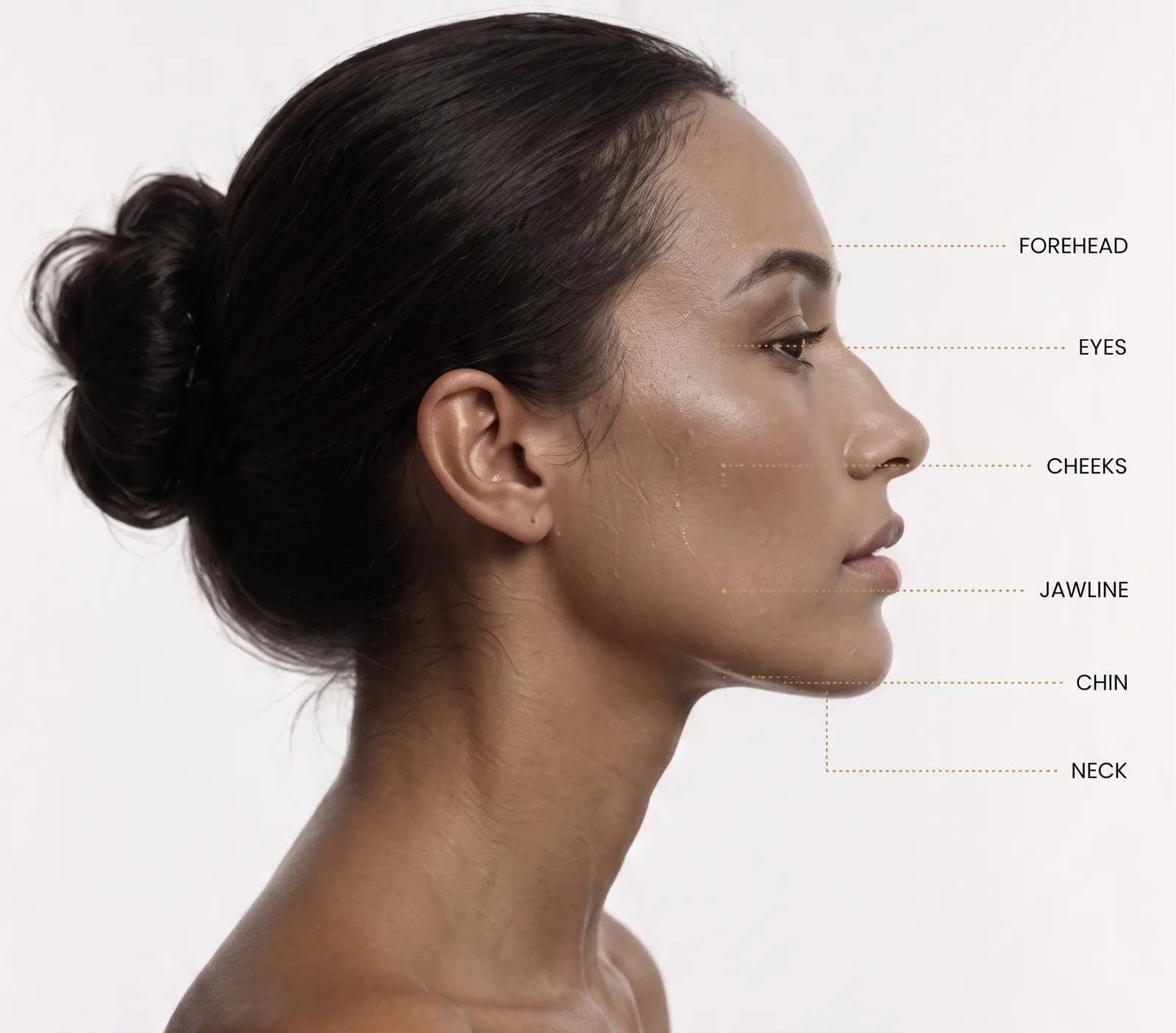
A facelift — rhytidectomy — addresses the mid to lower face. A neck lift targets the neck itself, removing excess skin and tightening the muscle beneath. Combined, they treat the lower third of the face as one unit.
- Facial laxity — skin that has lost its elasticity through the cheeks and lower face.
- Jawline definition — jowls and the softening of a once-defined jaw.
- Neck fullness or loose skin — excess skin, and the muscle banding that shows beneath the chin.
- Lower-face aging — deepening creases and the downward drift of the lower third.
- Loss of volume — the face deflates as well as sags, which is why fat injections are sometimes part of the plan.
- Natural contour — restoring the relationship between jaw, chin, and neck rather than simply tightening skin.
A Structural Approach
Dr. Stephenson does not work to a single technique. He selects the approach that suits the individual face — which is how risk is minimized and specific concerns are actually addressed, rather than approximated.
His dual training in Plastic Surgery and Oral & Maxillofacial Surgery means the face is assessed as a structure: the bone beneath, the soft tissue over it, and the skin above that. The jawline and neck are read as one relationship, not two separate problems.
Incisions are placed discreetly — along the hairline and behind the ears.
Who May Be a Candidate
A facelift and neck lift may be appropriate for patients with laxity through the lower face or neck. Whether it suits you is a question for a consultation, not a website.
- The decision rests on what concerns you, not on your age. Patients typically begin considering it in their early forties, and the most common age is the mid-fifties.
- The upper age limit is determined by overall health rather than by a number.
- Your anatomy shapes which technique is appropriate — and whether a facelift is the right procedure at all.
- Your general health matters. Full disclosure of your medical history is essential to assessing surgical risk accurately.
- Recovery has to be planned for. Time away from work, and someone to care for you immediately afterward, are part of the decision.
- Realistic goals. Dr. Stephenson will speak clearly about whether your goals are realistic and attainable.
Our practice guideline is to accept patients with a BMI of 33 or below, as higher BMI is associated with conditions that increase surgical risk. Candidacy is confirmed at consultation.
Techniques & How the Plan Is Built
Which technique suits you depends on how much laxity there is, where it sits, and what the underlying structure is doing.
Deep Plane
Lifts the underlying musculature and fat layers to address more advanced facial aging, working at the level of the deeper facial structures.
SMAS
Tightens the skin and the underlying Superficial Musculo-Aponeurotic System together. Suits laxity and sagging through the lower face and jawline.
Mini Facelift
For mild to moderate sagging and jowls. Targets the lower face, with less downtime than a full facelift.
Non-Surgical
Skin resurfacing, dermal fillers, and BOTOX® combined. No surgery, and minimal recovery, for those not seeking an operation.
The neck
Where the neck has good muscle tone and only mild banding, no separate neck treatment may be needed — those muscles extend back to the ears, so lifting them smooths the neck. Significant neck fat may be treated with liposuction, though not aggressively: fat maintains fullness in the skin and helps conceal muscle banding. Thick bands are addressed through a small incision under the chin, tying the muscles together centrally. Occasionally, partial removal of the salivary gland beneath the jawline is necessary where it contributes to fullness.
What may be discussed alongside it
Brow lifts and eyelid surgery are frequently performed with a facelift, and ear or nasal surgery sometimes. Dr. Stephenson rarely combines breast or body liposuction with a facelift, because total anesthesia time matters.
It is worth knowing what a facelift does not do: it improves the face from the upper cheeks down. It will not raise your eyebrows — that is a brow lift — and the eyes are addressed with blepharoplasty. Skin quality is a separate question again, and may be worth discussing alongside surgery.
Your written quote
Facelift and neck lift surgery starts at $12,250. After your consultation, our Patient Coordinator prepares a written quote for the specific plan you and Dr. Stephenson agree. Pricing and financing options are set out in full.
What Recovery Looks Like
Recovery varies with the technique used and the extent of the procedure. You will be given detailed post-operative instructions.
| Stage | Guidance |
|---|---|
| Swelling and bruising | Expected, and typically subsides within a few weeks. |
| Normal activities | Generally two to three weeks, depending on the technique and extent of the procedure. |
| After facial surgery | Avoid sudden head movements and bending with your head down for three weeks. |
| Heavy activity and the gym | Wait 6 to 8 weeks. |
| Seeing your results | Final results emerge as healing progresses, over roughly 6 to 12 weeks. |
Fuller recovery planning — time off work, private duty nursing, driving and flying, and lymphatic massage — is set out on our Patient Resources page.
Before & After
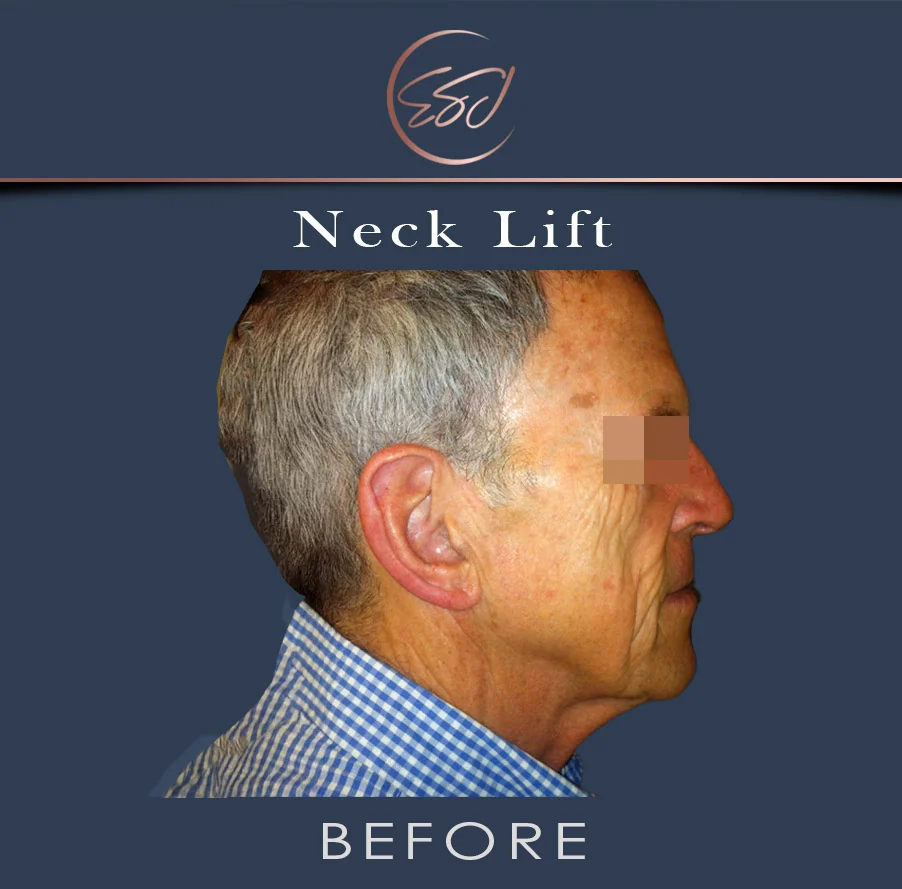
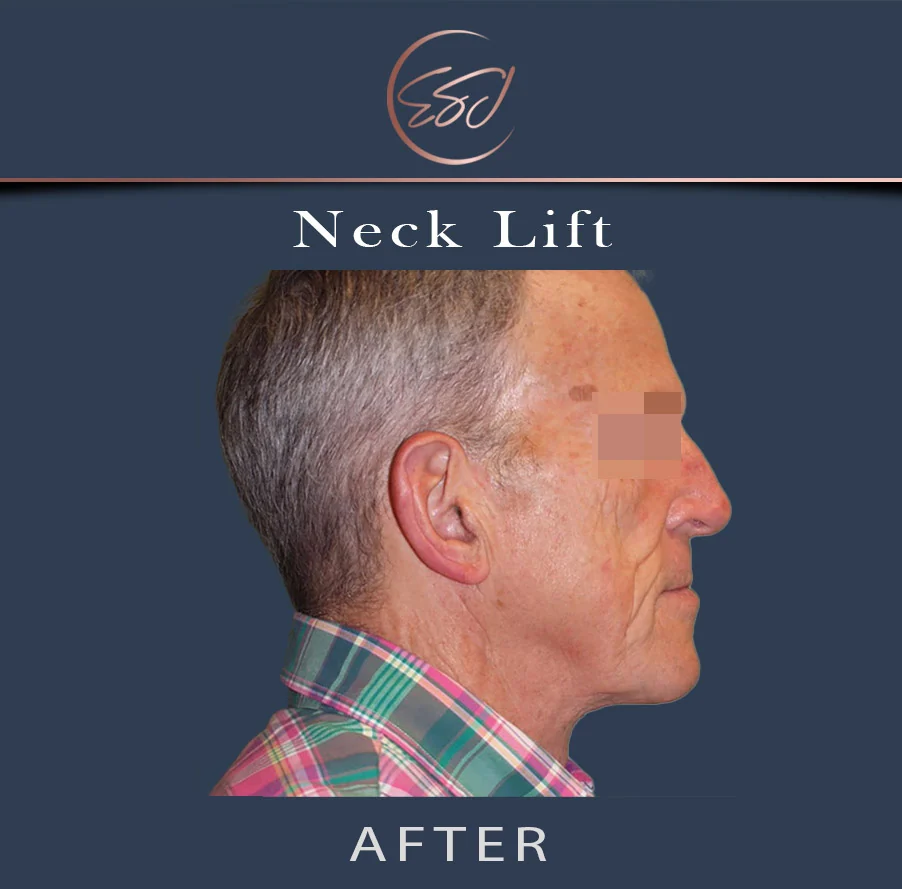
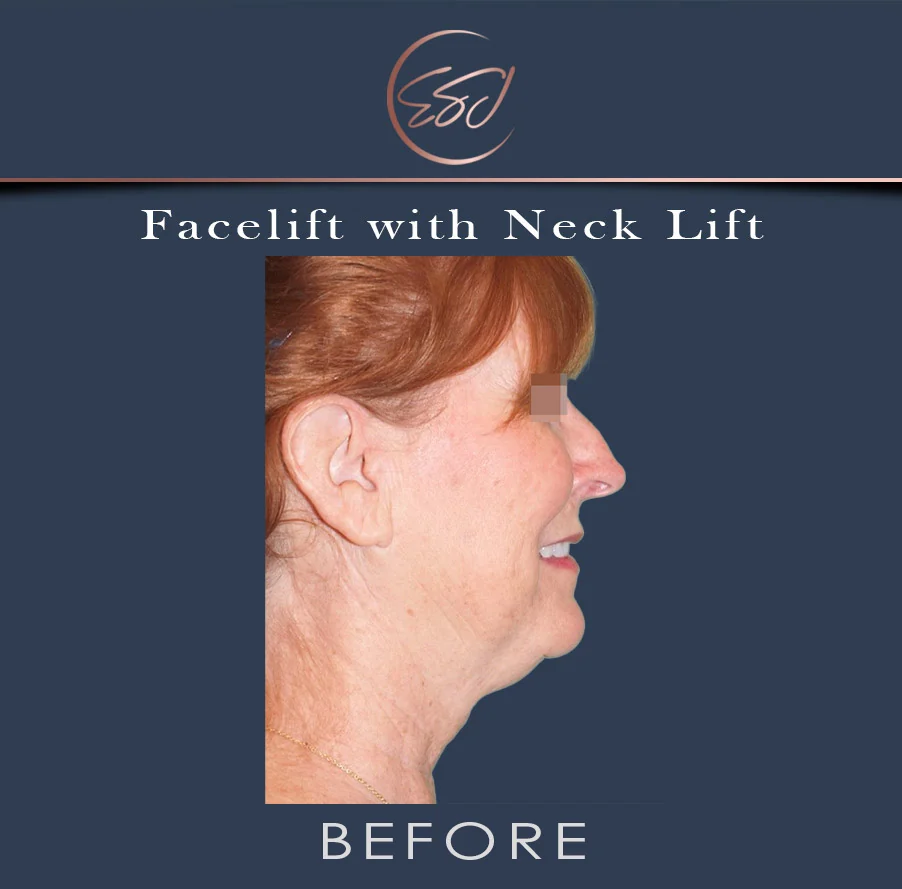
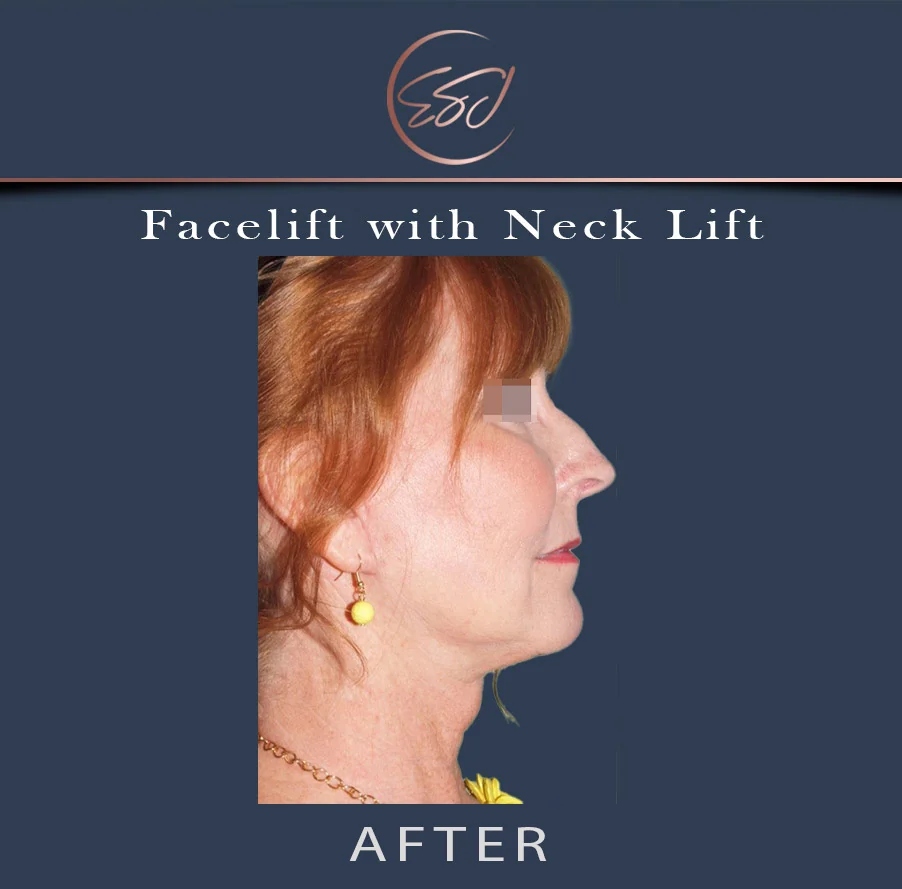
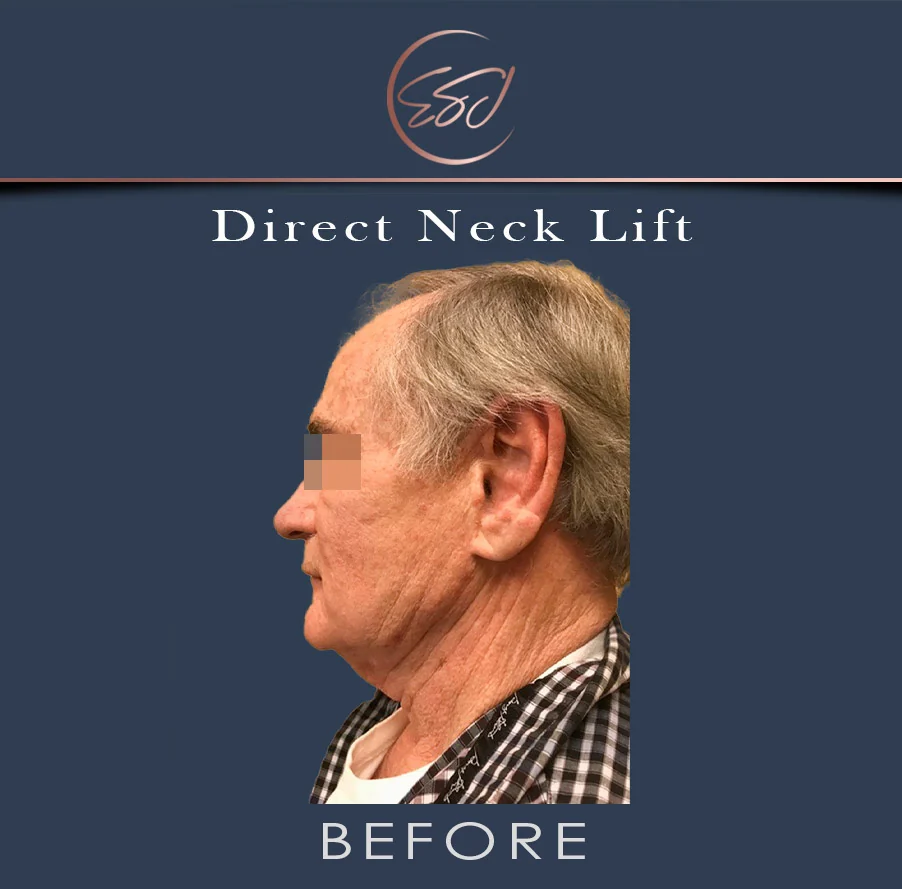
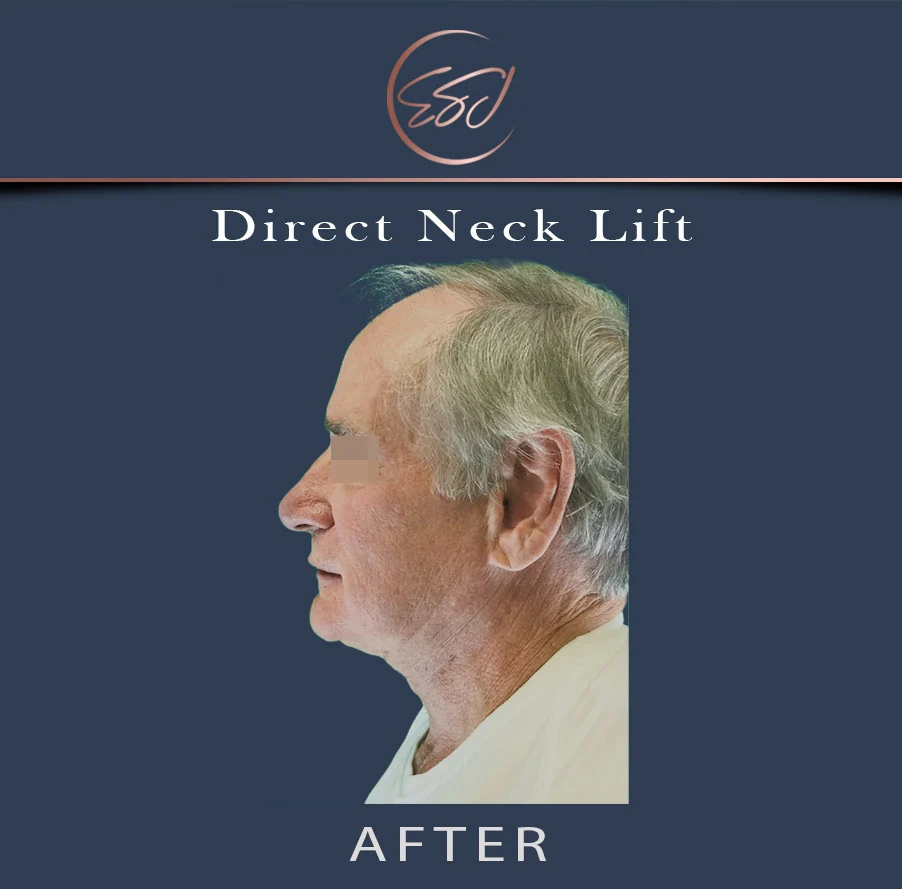
Photographs are of actual patients of ESJ Aesthetics, published with their consent. Results vary from patient to patient.
Often Considered Alongside
Eyelid Surgery
Blepharoplasty addresses the upper lids, lower lids, or both. Frequently performed alongside a facelift.
Read more →Chin & Profile Refinement
Chin projection and the submental area, drawing on Dr. Stephenson’s oral and maxillofacial training.
Read more →Facial Surgery for Men
The same structural approach, planned for masculine proportion.
Read more →Chemical Peels & Skin Quality
Surgery repositions structure; skin quality is a separate question, and often worth addressing alongside.
Read more →Facelift & Neck Lift FAQs
What is the ideal age for a facelift?
The decision rests on how much a particular concern bothers you, rather than on your age. Patients typically begin considering it in their early forties, and the most common age is the mid-fifties. The upper limit is determined by overall health rather than by a number.
How much younger will a facelift make me look?
A facelift can help patients look more rested, defined, and naturally refreshed by addressing laxity in the lower face and neck. The goal is not to create a specific “number of years younger,” but to restore facial balance in a way that still looks like you. Individual results vary, and no surgeon can promise a particular outcome.
Will I need another facelift later?
Not inherently. Unlike procedures involving implants, a facelift does not require revision. You will continue to age naturally, and whether to repeat the procedure later is entirely a matter of personal preference.
What is a skin lift facelift?
The surgeon elevates the skin and a layer of fat beneath it. It is the most straightforward technique and carries the least risk of the options available.
What is a short scar facelift?
Any full facelift where the incision passes around the earlobe but not up the back of the ear, starting beneath the sideburn and contouring around its front. It avoids the incision behind the ear, though in practice that scar rarely interferes with wearing a ponytail. The trade-off is that a short scar technique may produce more visible scarring and less natural-looking results, and the scar along the hairline is often more noticeable.
What is done to the neck during a facelift?
Where the neck has good muscle tone and only mild banding beneath the chin, no separate treatment may be needed — those muscles extend back to the ears, so lifting them smooths the neck. Significant neck fat may be treated with liposuction, though not too aggressively: fat maintains fullness in the skin, prevents a crepe-like appearance, and helps conceal muscle banding. Thick bands are addressed through an incision under the chin, tying the muscles together centrally. Occasionally, partial removal of the salivary gland beneath the jawline is necessary where it contributes to fullness.
What is the role of fat injections during a facelift?
One of the major changes with aging is a loss of facial volume — the face deflates and collapses inward as well as sagging. Restoring that volume through fat injections can be an important part of the procedure.
Will there be scars?
Yes, wherever an incision is made. But the areas where facelift incisions are placed heal remarkably well, and when an incision follows the curves of natural anatomy it becomes extremely difficult to notice, even close up.
Can laser treatments achieve the same result?
No. Lasers can remove broken capillaries and brown spots, soften wrinkles, and tighten skin — but they do not tighten skin to the degree a facelift does, they do not lift sagging tissue underneath, and they cannot tighten the neck. A facelift is like taking in the hem of a garment; a laser treatment is like pressing the fabric.
Can other procedures be done at the same time?
Brow lifts and eyelid surgery are frequently performed alongside a facelift, and ear or nasal surgery sometimes. Dr. Stephenson rarely combines breast or body liposuction with facial surgery, because the total time under anesthesia matters.
Will a facelift raise my eyebrows?
No. A facelift improves the face from the upper cheeks down. The eyebrows and forehead are addressed with a brow lift, and the eyes with eyelid surgery.
How is the cost determined?
Facelift and neck lift surgery starts at $12,250. The final figure depends on the technique, the extent of the procedure, and your individual plan. After your consultation you receive a written quote covering the whole plan.
Further Reading
Discuss Your Options
An hour with Dr. Stephenson, an examination, and a written quote for the plan you agree together.