Otoplasty & Ear Surgery in Dunwoody,
Sandy Springs & North Atlanta
Ear contouring covers four separate procedures — ear pinning for protruding ears, repair of a torn earlobe, repair of a stretched one, and earlobe reduction. Most take under an hour, and three of the four are done in our office under local anesthesia.
What Ear Surgery Addresses
Ears are read as part of facial proportion rather than on their own, which is why Dr. Stephenson plans these against the rest of the face rather than to a standard.
- Protruding ears — in children and adults alike, corrected by repositioning and reshaping the ear.
- Ear size and shape — where the ear sits out of proportion with the rest of the face.
- A torn or split earlobe — from a sudden pull on an earring, or from years of heavy jewellery.
- Stretched earlobes — the holes left behind after gauging.
- Large earlobes — a condition the practice calls Megalobe, which may be inherited or develop over time.
Four Procedures, Planned Separately
These are grouped together because they concern the ear. They have little else in common — different settings, different anesthesia, and very different recoveries.
Otoplasty
Ear pinning. Repositions and reshapes protruding ears. The only one of the four that is not an in-office procedure under local anesthesia.
Torn Earlobe Repair
Mends a split or torn lobe. A quick outpatient procedure under local anesthesia; both ears can be done in the same session.
Stretched Earlobe Repair
Closes the holes left by gauging. Performed in our office under local anesthesia.
Earlobe Reduction
Reduces large earlobes to a more proportionate size. In-office under local anesthesia, with a swift recovery.
Otoplasty is not only for children
Ear pinning is most associated with childhood, and it is commonly done then. But adults are equally suitable candidates, and a good number of Dr. Stephenson’s otoplasty patients are adults who have lived with the concern for years. Suitability is decided on individual need and goals — not on age, and not on how long you have waited.
What stretched earlobe repair can and cannot do
Two things are worth knowing before you book it. The first is timing: the repair is recommended once the lobes are no longer actively stretching and the size of the holes has stabilised. The second is the result. Closing a gauged lobe significantly improves its appearance by minimising the stretched aspect, but it may not fully restore the lobe to its original state. Beyond that, the timing is yours — the procedure can be considered whenever you decide to revert.
Dual training, applied to proportion
Dr. Stephenson’s training in both Plastic Surgery and Oral & Maxillofacial Surgery means the ear is assessed against the underlying facial structure rather than in isolation — which is what keeps a corrected ear looking like it belongs on the face it is attached to.
Cost
Otoplasty starts at $9,300, and pricing varies with the extent of correction required. The earlobe procedures are performed in our office under local anesthesia and are quoted individually at consultation. Our Patient Coordinator prepares a written quote for the plan you agree. Pricing and financing options are set out in full.
Who May Be a Candidate
Because these are four procedures, candidacy is four separate questions. What they share is that the answer comes from an examination.
- For otoplasty: children and adults both. Suitability is determined by individual need and goals rather than by age.
- For torn earlobe repair: anyone who has had trauma or damage to the lobe and wants its natural appearance restored.
- For stretched earlobe repair: once the lobes are no longer actively stretching and the hole size is stable.
- For earlobe reduction: where the lobe is disproportionately large, whether inherited or developed over time.
- Your general health. Full disclosure of your medical history is essential to assessing surgical risk accurately.
Our practice guideline is to accept patients with a BMI of 33 or below, as higher BMI is associated with conditions that increase surgical risk. Candidacy is confirmed at consultation.
What Recovery Looks Like
Otoplasty and the earlobe procedures recover quite differently. You will be given detailed post-operative instructions for whichever you have.
| Stage | Guidance |
|---|---|
| Otoplasty — swelling | Swelling and discomfort for approximately one to two weeks. |
| Otoplasty — head position | Keep your head elevated to minimise swelling. |
| Otoplasty — headband | A protective headband is used. Follow Dr. Stephenson's direction on how and how long to wear it. |
| Otoplasty — activity | Avoid strenuous activity through the initial recovery period. |
| Earlobe repair — recovery | Relatively short. |
| Earlobe repair — pressure | Avoid putting pressure on the repaired lobe during initial healing. |
| Earlobe repair — earrings | No heavy earrings during the initial healing phase. |
| Earlobe repair — activity | Avoid strenuous activity through the initial healing phase. |
| Stretched lobe repair | Avoid pressure on the repaired lobes and heavy earrings while they heal. |
Recovery time varies between individuals for all four procedures. Fuller recovery planning — time off work, driving and flying, and swelling and bruising support — is set out on our Patient Resources page.
Before & After
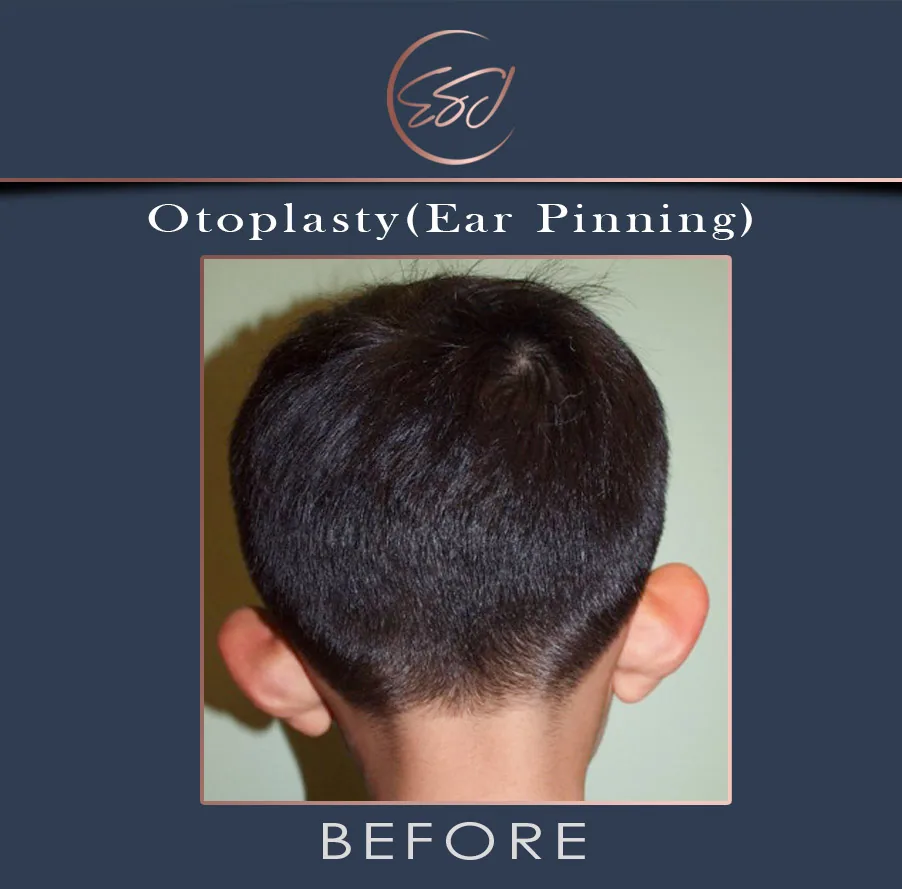
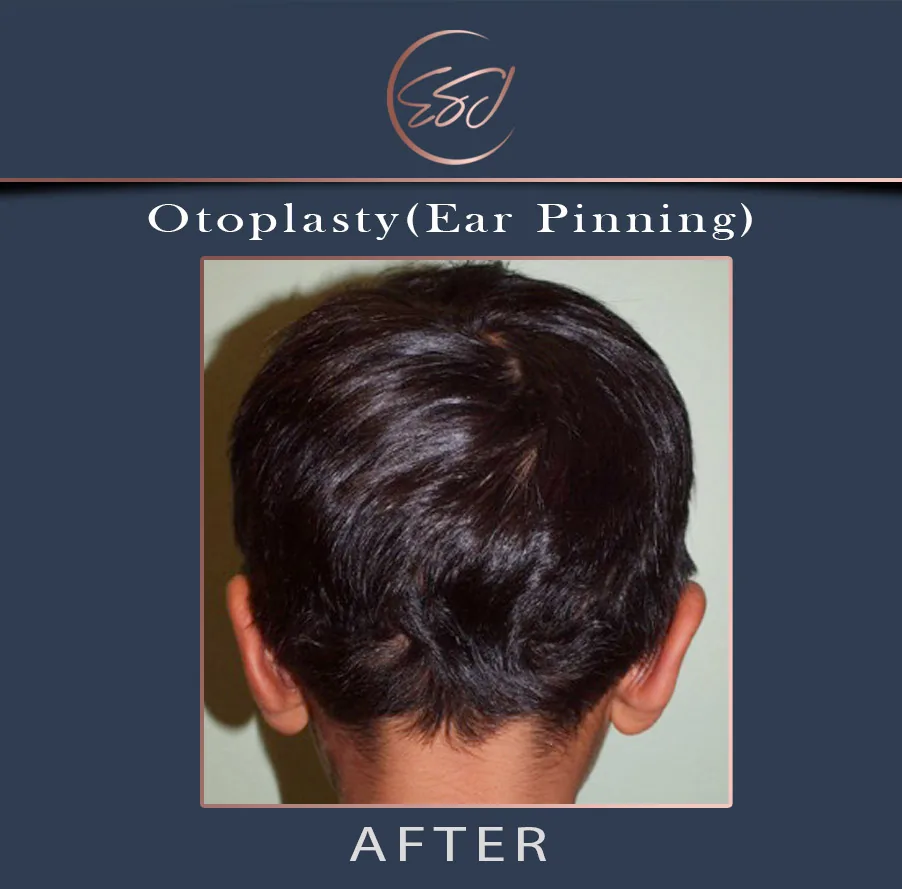
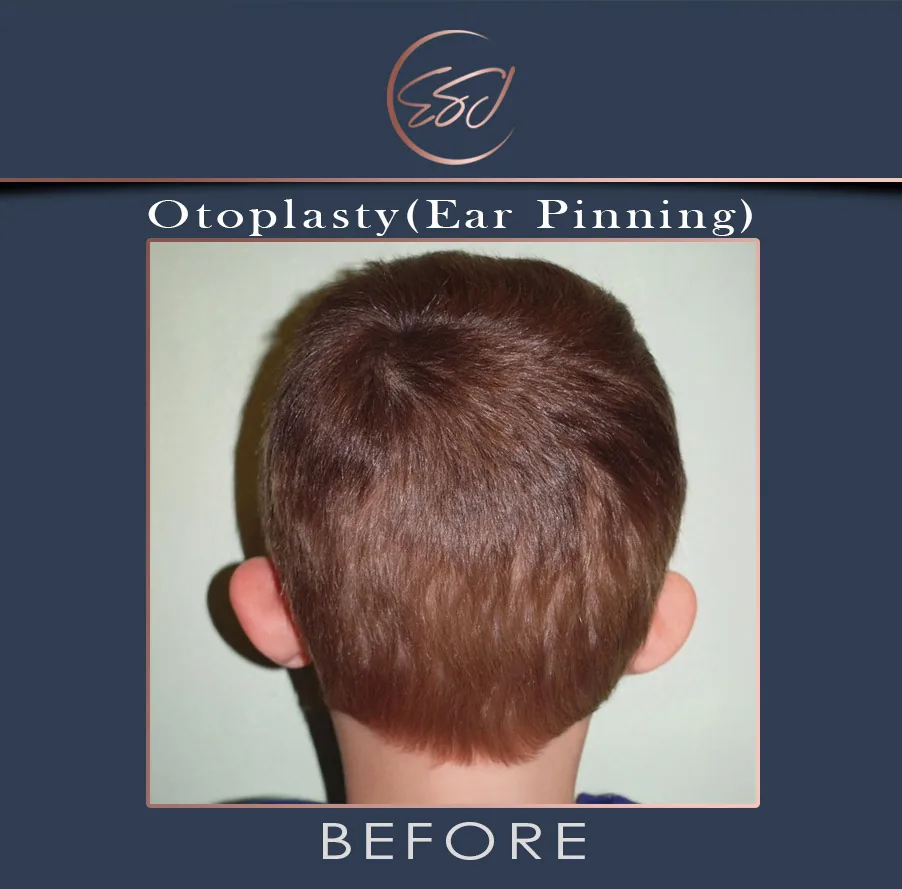
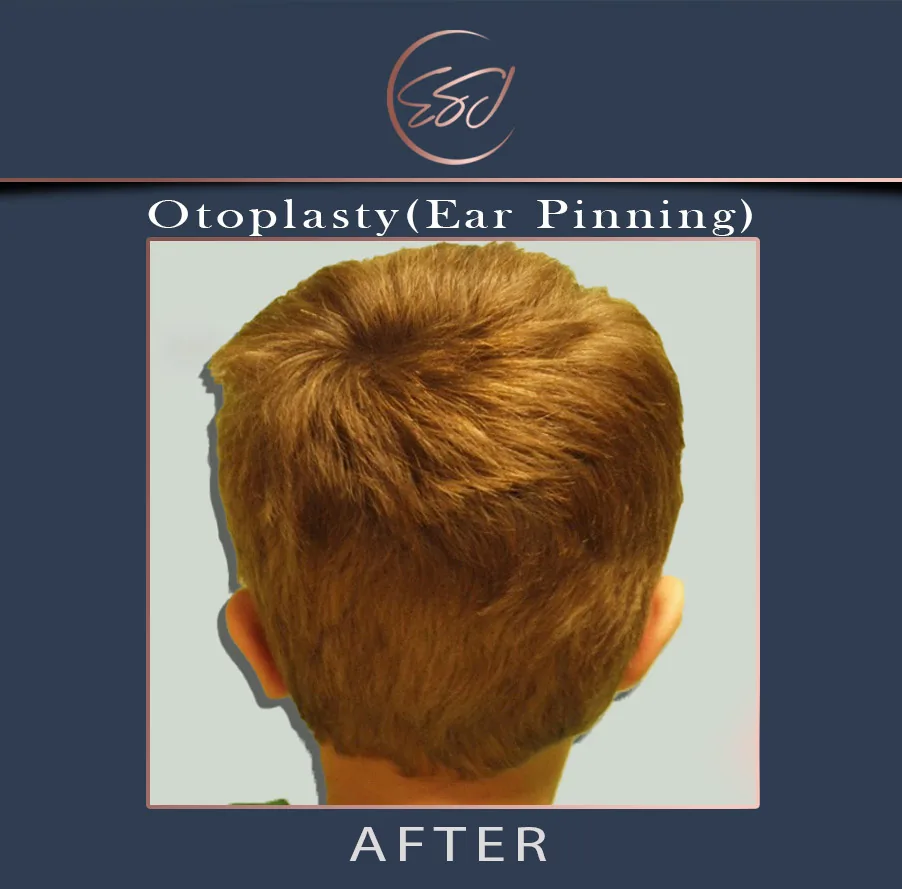
Photographs are of actual patients of ESJ Aesthetics, published with their consent. Results vary from patient to patient.
Often Considered Alongside
Brow Lift
Ear surgery is among the procedures commonly performed at the same sitting as a brow lift.
Read more →Facelift & Neck Lift
Ear surgery is sometimes performed alongside a facelift, where anesthesia time allows.
Read more →Eyelid Surgery
The upper and lower lids. Another procedure planned around facial proportion rather than to a standard.
Read more →Chin & Profile Refinement
Chin projection and the submental area, drawing on Dr. Stephenson’s oral and maxillofacial training.
Read more →Ear Surgery FAQs
Can adults have otoplasty, or is it mainly for children?
Otoplasty is not limited to children. Adults can have the procedure to address the shape or position of their ears, and suitability is determined by individual needs and goals rather than by age.
How long is the recovery after otoplasty?
It varies between individuals, but patients typically have swelling and discomfort for approximately one to two weeks. Following the post-operative instructions carefully is what makes that go smoothly.
What aftercare does otoplasty need?
Keeping the head elevated to minimise swelling, avoiding strenuous activity during the initial recovery period, and following Dr. Stephenson's direction on the use of a protective headband.
What is torn earlobe repair, and who is it for?
It is a surgical procedure to mend a split or torn earlobe. It suits anyone who has had trauma or damage to the lobe and wants its natural appearance restored.
Is torn earlobe repair a quick procedure?
Yes. It is typically a quick outpatient procedure under local anesthesia, though the duration varies with the extent of the tear.
Can both ears be repaired at once?
Yes. Torn earlobe repair can be performed on both ears in the same session where that is needed, which gives a symmetrical outcome.
What is the recovery like after torn earlobe repair?
Relatively short. Avoid putting pressure on the repaired lobe, and avoid heavy earrings and strenuous activity during the initial healing phase.
What is gauged earlobe repair?
A surgical procedure designed to close the holes left by stretched earlobes, with the goal of improving the overall appearance of the lobe.
When should gauged earlobe repair be done?
Once the earlobes are no longer actively stretching and the size of the holes has stabilised. Beyond that the timing is yours — it can be considered whenever you decide to revert.
Can gauged earlobe repair fully restore my earlobes?
Not necessarily to their original state. It does significantly improve their appearance by minimising the stretched aspect, and that is the honest expectation to hold going in.
How long does recovery take after gauged earlobe repair?
It varies between individuals. Avoid pressure on the repaired lobes and heavy earrings during the initial healing period.
What is earlobe reduction?
Surgery for large earlobes — a condition sometimes called Megalobe, which can be inherited or develop over time. It is performed in our office under local anesthesia, with minimal discomfort and a swift recovery.

Discuss Your Options
An hour with Dr. Stephenson, an examination, and a written quote for the plan you agree together.